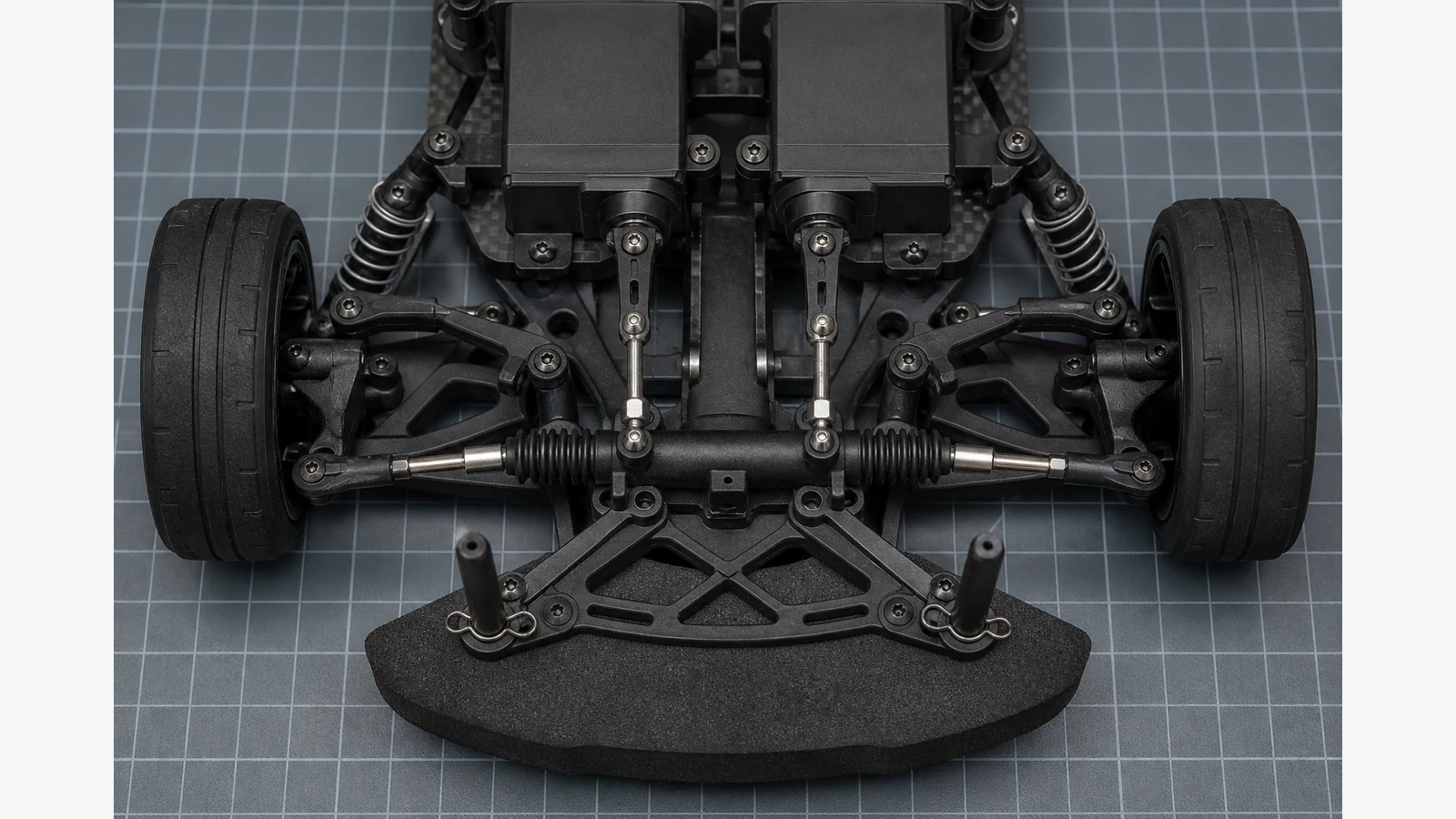
How to Align Dual RC Steering Servos Without Making Them Fight at Neutral
Both servos and both linkages must agree at neutral before load is applied. If a dual-servo layout buzzes or warms with no steering input, power off, isolate the linkages, confirm whether one unit is damaged, and realign lengths so the pair can sit quiet at centre—rather than forcing a horn or adding large trim to hide the fight.
This UK checklist explains general dual-servo geometry. Vehicle manufacturers may require identical servo models in a paired system; follow that rule when published. Do not treat a single aftermarket product as approved for every dual-servo conversion.
Power-off inspection and safe isolation after impact or replacement
After a hard landing or a servo change, disconnect power and isolate linkages as the vehicle manual describes before energising either unit under rack load.
- Inspect horns, savers, turnbuckles, rack posts, plugs and visible wiring on both sides.
- Free each linkage and feel for roughness, bent rods or a rack that will not return straight.
- Look for one obviously damaged servo before blaming radio mixing or trim.
- Confirm mounting hardware is complete on both cases so case twist is not creating false bind.
Binding or a stalled servo can draw excessive current, so buzz or flutter in a fighting pair should be corrected promptly. Frequent checks of mounting screws and linkages remain part of routine care.
Why identical models may be required in a paired system
Where the vehicle manufacturer specifies identical servos, mismatched speed, centring behaviour or travel can keep the pair in conflict even when linkages look similar. Use the published requirement rather than assuming any two standard-size units will share load evenly.
If one servo in an identical pair still buzzes after linkages are free, treat that unit as the suspect and stop rather than compensating electronically on the healthier side.
Centre each servo and adjust linkage length—not forced horns
- Return transmitter trim to neutral on the correct model memory.
- Power in the manual order so each unloaded servo can find centre with linkages disconnected if the vehicle procedure allows.
- Fit each horn as close to the intended orientation as the spline permits without forcing teeth.
- Adjust linkage length so both sides meet a straight rack at electronic neutral; do not twist a horn to hide a length error.
- If a large trim correction appears necessary, disconnect the horn, centre trim, re-find neutral, refit close to centre and keep later trim small.
Do not command more travel than the steering parts allow; excess endpoints can permanently damage servos that are already sharing a rack.
Neutral noise, warmth, travel checks and stop conditions
Before driving, confirm the pair is quiet at neutral, remains free of unexpected warmth with no input, and produces comparable left and right travel without grinding into mechanical stops.
Stop power immediately for abnormal heat, smell, smoke, damaged wiring, grinding, erratic movement or a stalled output. Do not open electronics, bypass protection or improvise power wiring. Use the vehicle manual or manufacturer service support when conflict continues after identical-unit and linkage checks.
If you later browse a standard-size high-torque brushless option for heavy builds, open the BrushServo BLS-HV70MG product page only after confirming whether your chassis even permits a dual conversion and which models the maker allows—without implying that product is a matched dual-servo kit. Only a 12-month warranty duration is stated for that offer here.
FAQ
Why do dual servos buzz only when the linkages are connected?
Connected linkages can force two outputs that disagree at centre to fight through the rack. Isolate and realign so both agree at neutral before load is applied.
Can I mix different servo brands in a dual truck?
Only if your vehicle manual allows it. Many paired systems expect identical models so centring and travel behaviour match.
Should I raise torque to stop dual-servo fighting?
No. Fighting at neutral is an alignment and matching problem first. More torque can increase stress if geometry still conflicts.
When should I seek service instead of more bench time?
Seek service when grinding, heat, smell or a damaged unit persists after power-off inspection and correct linkage isolation per the vehicle manual.