Why Is My RC Steering Servo Buzzing at Neutral? A Safe Check Order
A faint holding sound under light load is not the same as constant buzzing, warmth or strain with the steering centred and no input. Treat no-input buzzing, heat or a stalled feel as a stop-and-inspect symptom: power off, check for mechanical bind or dual-servo conflict, then only return trim, horn position and endpoints using your exact radio and vehicle manuals.
This guide covers general diagnostic order for UK hobby setups. It does not invent temperature, current or sound thresholds, and it does not claim any particular servo model will silence the noise. Your vehicle, transmitter, receiver, ESC or BEC and servo manuals control settings and compatibility.
Power-off inspection before you chase radio settings
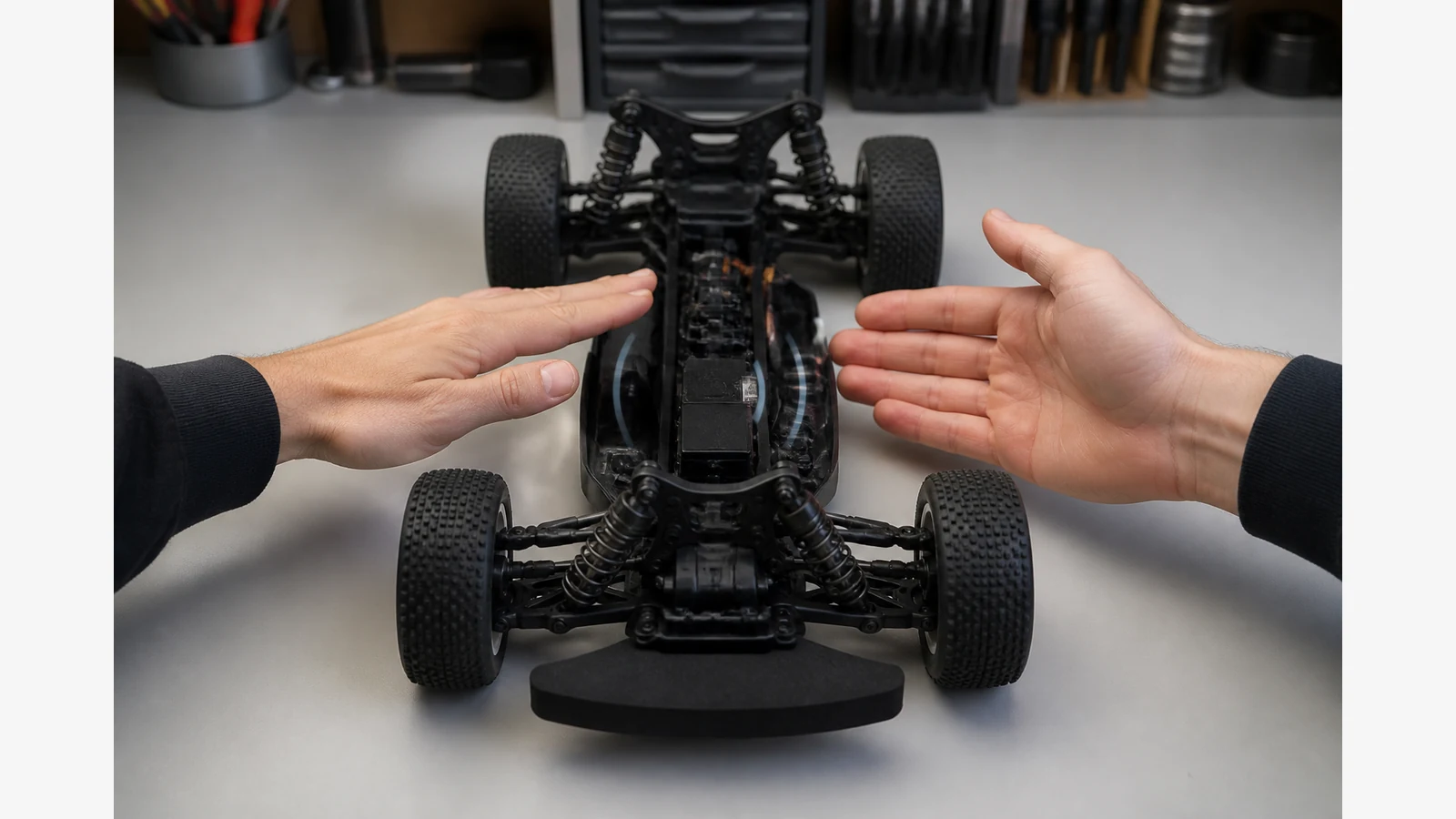
Disconnect power and inspect for crash damage, loose hardware, trapped wires and linkage bind before adjusting the radio.
- Look for bent horns, cracked servo savers, displaced rod ends, damaged plugs and pinched wires near the servo bay.
- With the linkage free to move by hand within the vehicle manual limits, feel for roughness, tight spots or a rack that will not sit straight.
- Confirm mounting screws and horn screws are present and snug to the manual torque guidance if published; use confirmed details fastener values.
- If dual steering servos are fitted, isolate whether one unit or a shared linkage is fighting the other before blaming a single channel setting.
Manufacturer guidance commonly links grinding or erratic action to gear inspection needs, and treats a hot servo as a stop-and-service symptom rather than a normal setup result. Binding or a stalled servo can draw excessive current, so buzz or flutter should be corrected promptly rather than ignored while you keep driving.
Separate single-servo load from dual-servo alignment conflict
Constant buzzing or warmth with no steering input can indicate misaligned dual servos on vehicles that use a paired layout. On a single-servo car, the same symptoms more often point to linkage bind, an off-centre horn, worn saver hardware or endpoints that push into a mechanical stop.
- Power off and disconnect linkages as your vehicle manual describes after an impact or servo change.
- Identify obvious damage to one side of a dual-servo layout before powering either unit under load.
- Where the manufacturer requires identical servo models in a pair, do not mix unmatched replacements without checking that requirement.
- Realign linkages so both sides can sit quiet at neutral once the radio is powered in the manual sequence; do not force a horn onto the spline to hide a length error.
If only one servo in a pair buzzes after linkages are free, treat that unit as the suspect and stop rather than compensating with large trim on the transmitter.
Return trim, horn position and endpoints to the manual sequence
Only after the mechanism moves freely should you restore electronic centre and travel.
- Select the correct model memory on the transmitter and return steering trim to neutral as the radio manual shows.
- Power the system in the order your manuals specify so an unloaded servo can find centre before the horn is judged.
- Refit the horn as close to the vehicle’s intended orientation as the spline permits; if a large trim correction is needed, disconnect the horn, centre trim, power to neutral, then refit close to centre and use only small trim afterwards.
- Set left and right travel so the servo is not commanded past what the steering parts allow; excess endpoint can permanently damage a servo.
Frequent checks of mounting screws and linkages remain part of routine care whenever buzz returns after a hard landing or chassis flex.
Stop conditions, service boundaries and a next step
Stop power immediately if you notice abnormal heat, smell, smoke, damaged wiring, grinding, erratic movement or a stalled output. Do not open the electronics, bypass protection circuits or improvise power wiring.
Replacement or manufacturer service is the safer path when gears feel damaged, the output will not hold centre after a correct mechanical reset, or dual-servo conflict continues after identical-unit and linkage checks per the vehicle manual. If you later compare a standard-size high-torque brushless steering option for heavy 1/8 and upgraded 1/10 builds, review the BrushServo BLS-HV70MG product page for fitment notes and the stated 12-month warranty duration—without treating that product as a guaranteed fix for buzzing at neutral.
FAQ
Is any buzzing at centre always a fault?
Not always. A brief holding effort under load can differ from constant no-input buzzing, warmth or strain. Persistent noise with the wheels straight and no stick input deserves a power-off inspection.
Can I keep driving if the servo is only warm?
No. Treat unexpected warmth with no input as a stop condition. Heat can indicate bind, misalignment or a stall path that draws excessive current.
Should I open the servo case to look at the gears?
No. Use external inspection and the manufacturer service route. Opening the case is outside safe DIY guidance here and can void support paths.
Will a higher-torque servo stop neutral buzz by itself?
Not as a claim you can rely on. Buzz at neutral is often geometry, alignment or endpoint related. Diagnose those first; any upgrade is a separate compatibility decision against your manuals.