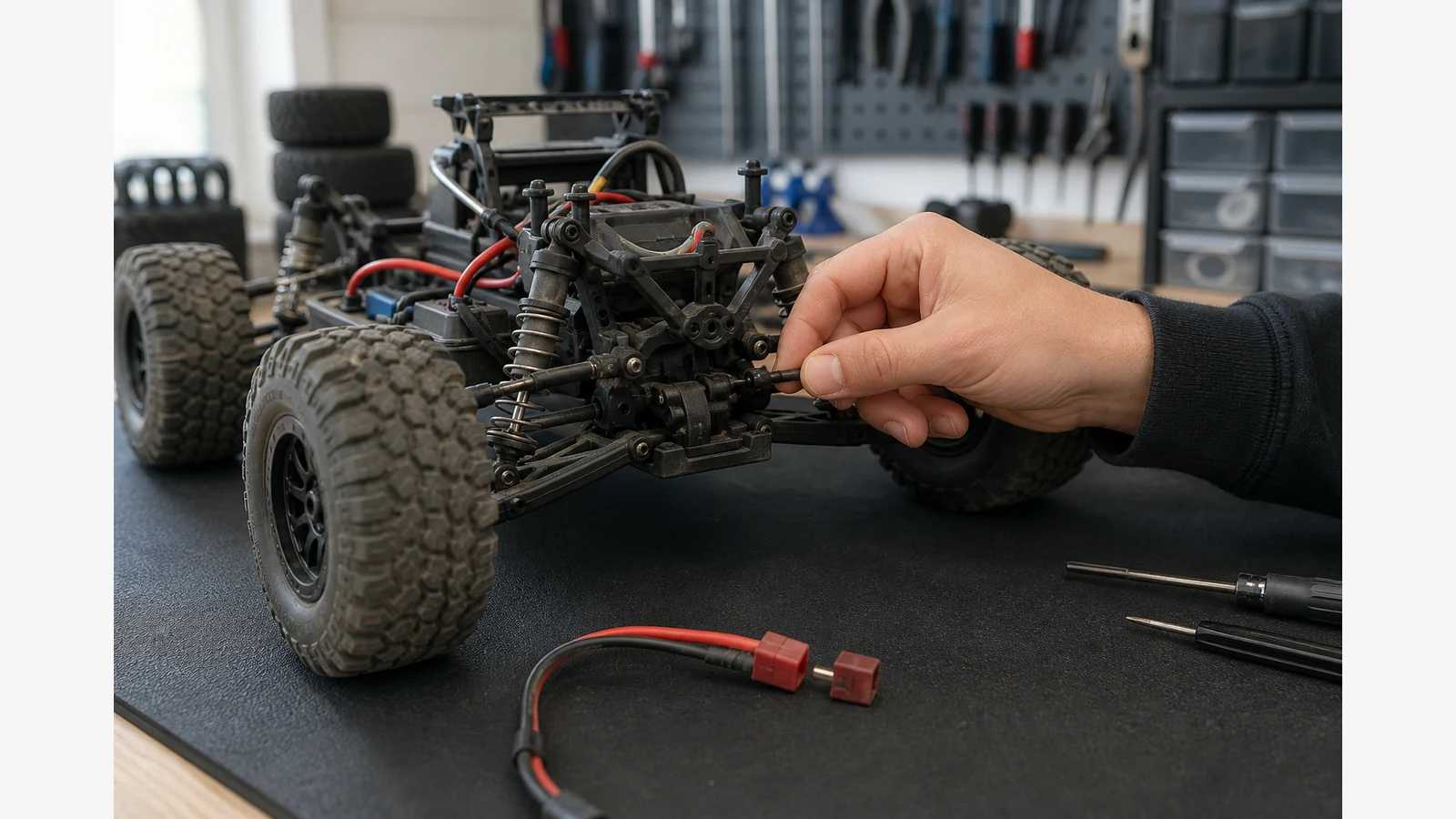
RC Steering Servo Stopped Working After a Crash: A Power-Off-First Check
If steering dies after an impact, power off first. Inspect the horn, servo saver, linkage, rack, plugs and visible wiring before energising anything. Only then, and only with manual-approved precautions, use a brief test to distinguish silence, motor sound, clicking or grinding—without bypass tests that invent wiring paths.
This UK guide separates displaced linkages and damaged geartrains from radio-path symptoms at a general level. It does not claim a replacement servo is automatically required, and it does not walk you through opening the case.
Immediate stop conditions and power-off inspection
Keep power off if you see damaged wiring, smell burnt electronics, notice a bent output shaft, or find a mechanism that is physically jammed. Do not open the electronics, bypass protection or improvise power wiring.
- Confirm the horn screw is present and the horn has not jumped spline teeth.
- Check the saver for cracks, missing hardware and links that popped off ball cups.
- Inspect the rack, posts and turnbuckles for bends that lock the front end.
- Reseat plugs only when clean and undamaged; replace visibly crushed connectors rather than forcing them.
Manufacturer guidance links grinding or erratic action to the need for gear inspection via proper service channels, and treats a hot servo as a stop-and-service symptom rather than a setup quirk.
Brief manual-approved listening test—then stop if harsh
If the mechanical path looks free and connectors are sound, follow your radio and vehicle manuals for a short, controlled power-on. Listen for silence, a normal motor note, clicking or grinding, then power off again.
- Silence with a confirmed radio bind may still be a receiver, channel or power-supply issue—verify with the manuals rather than jumper tests.
- Clicking or grinding with little or no output motion suggests internal gear damage; stop and seek service or replacement assessment.
- Movement that stalls into a bent link is still a mechanical fault; free the linkage before another attempt.
Binding or a stalled servo can draw excessive current. Repeated stalls and forced steering after a crash can increase damage, so do not keep commanding travel into a jam.
Separate linkage damage from radio-path symptoms without bypasses
With linkages disconnected as the vehicle manual allows, a servo that centres cleanly points back to steering hardware. A servo that still clicks, grinds or stays dead with a free output points to the servo or its power/signal path. Dual-servo vehicles need both sides checked for a damaged unit and misalignment that can cause constant buzzing or warmth with no input once reconnected.
Use confirmed details bench harnesses, battery leads or BEC jumpers outside published procedures.
Repair-versus-replacement boundary and next step
Repair the obvious external hardware when that restores free geometry. Choose manufacturer service or replacement when gears are suspected, heat or smell appeared, or the output will not centre after a correct mechanical reset. On dual layouts, identify the damaged servo and respect any requirement for identical paired units before realigning linkages so the pair is quiet at neutral.
If you later need a standard-size brushless steering candidate for heavy 1/8 or upgraded 1/10 builds after your inspection shows the old unit is finished, review the BrushServo BLS-HV70MG product page as a soft browse option—not as an automatic crash diagnosis. Only a 12-month warranty duration is stated for that offer here.
FAQ
Why power off before touching the steering after a crash?
A jammed or shorted path can draw excessive current. Visual checks first reduce the chance of compounding electrical and gear damage.
Is clicking after an impact always a broken gear?
Clicking is a strong warning of gear or mechanical trouble, but confirm the horn and links are not the source. Persistent clicking with a free linkage still warrants service rather than more driving.
Can I keep steering manually to “free” a stuck servo under power?
No. Forcing a powered stall increases current draw and damage risk. Free the mechanism with power off.
Does every post-crash failure mean buy a new servo?
No. Displaced links and savers cause many no-steer moments. Replace or service the servo when evidence points to internal damage or unresolved electrical faults after safe checks.