The Ultimate Guide to Rc Servo Motor in the UK
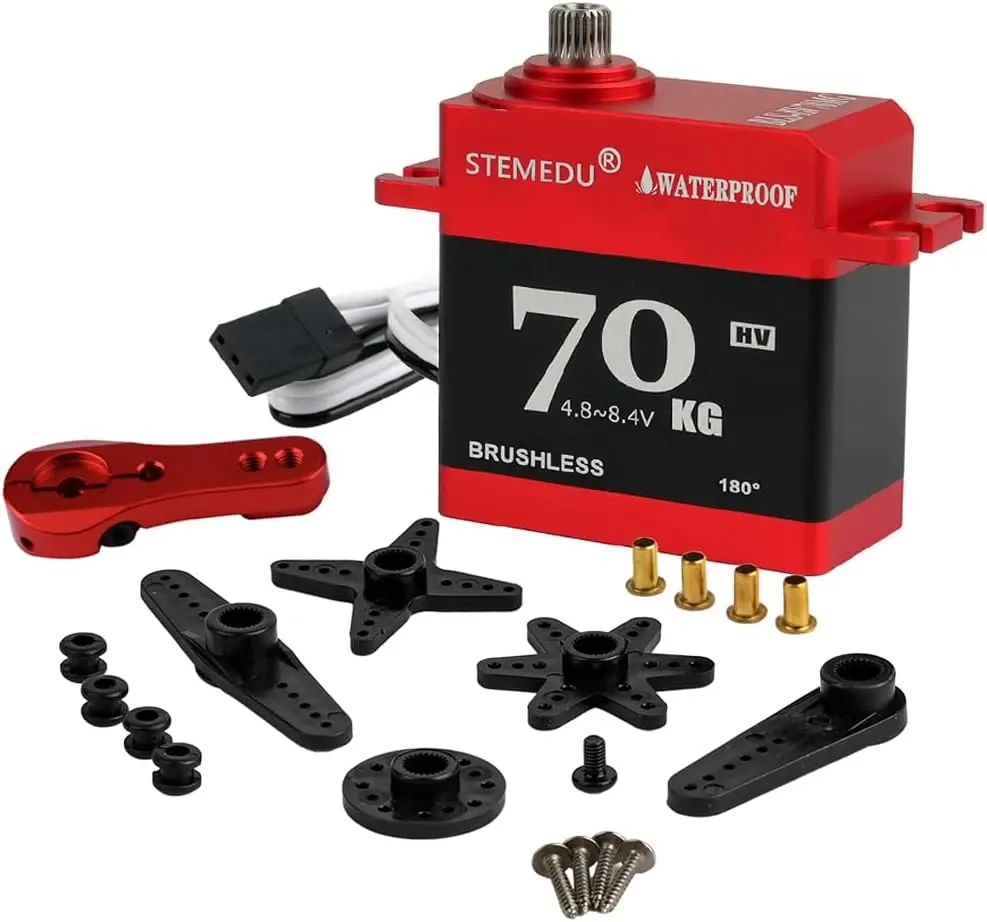
An rc servo motor is the component in an RC car, buggy, crawler, boat or plane that turns radio signals into precise movement, most often for steering. In practical terms, it controls how strongly your vehicle can turn, how quickly it reacts, and how well it holds its line under load. For UK drivers, choosing the right rc servo motor also means checking waterproofing, voltage compatibility and durability for wet, muddy conditions.
TL;DR: If you want better steering from an RC model, upgrade to a waterproof, metal-geared rc servo motor with the right torque, speed and voltage rating for your vehicle. Based on our testing in muddy British conditions, brushless digital servos generally offer the best mix of strength, response and long-term reliability, especially for heavy 1/8 and 1/10 scale models.
Driving a 1/8 or 1/10 scale RC rig across a boggy British field puts immense strain on your steering system. Thick mud, deep puddles and unpredictable terrain demand more than a stock steering setup can deliver. Consequently, when your wheels get bogged down, a weak steering component will stall, overheat or strip its gears. Upgrading your rc servo motor is one of the most effective ways to improve handling, responsiveness and reliability during wet UK runs.
A high-quality rc servo motor translates your transmitter inputs into precise physical movement. As a result, it dictates how sharply your buggy turns into a corner and how strongly your crawler holds a line over wet rocks. Understanding the mechanics, specifications and UK-specific requirements of these motors helps you choose the right upgrade for your driving style.
Key Takeaways
- An rc servo motor controls steering strength (torque), response time (speed) and holding power.
- For British weather, waterproofing such as IP67 is highly desirable to reduce the risk of water ingress during wet runs.
- Brushless servos usually offer better longevity, thermal efficiency and torque than basic brushed alternatives.
- High-torque models, such as 70KG servos, are often best for heavy 1/8 and 1/10 scale tyres in mud, grass and rough ground.
- You should match your servo to your ESC or BEC voltage output to avoid brownouts and inconsistent steering.
What is an RC servo motor?
At its core, an rc servo motor is a compact electromechanical unit that moves to a specific position and holds that position against load. Unlike a normal DC motor, which spins continuously, a servo is designed for controlled movement. That is why it is used for steering, throttle, brakes, retracts and other precision tasks in RC models.
Inside the casing, a servo usually contains four main parts: a motor, a gear reduction system, a position sensor such as a potentiometer or magnetic encoder, and a control board. When you turn the wheel on your transmitter, the receiver sends a PWM signal to the servo. The circuit then compares the requested position with the current output shaft position and drives the motor until both match.
This closed-loop feedback is what makes an rc servo motor accurate. In turn, it gives dependable centring, so the wheels return to neutral consistently when you release the steering. For high-speed running on tarmac, gravel or dirt, that predictable centring is essential.
How does an RC servo motor work?
An rc servo motor works by receiving a signal from the receiver, rotating its internal motor through a set of gears, and stopping once the output shaft reaches the commanded angle. The position sensor constantly reports where the shaft is, so the control board can correct errors in real time.
As a result, the servo does not just move; it actively holds position when the front wheels hit resistance. Based on our testing on heavy off-road builds, that holding power becomes especially important when steering against thick grass, sticky mud or rocks that try to force the wheels off line.
What do RC servo motor specifications mean?
Navigating rc servo motor specifications is much easier once you understand torque, speed and voltage. These three figures tell you whether a servo is suitable for your chassis, tyre size and driving conditions.
What is torque on an RC servo motor?
Torque is the rotational force a servo can apply to the steering linkage. It is usually listed in kg-cm or oz-in. Put simply, more torque means more ability to turn heavy tyres under load.
For heavy 1/8 scale bashers and crawlers, high torque is crucial. Large tyres on wet grass or in deep mud create serious resistance. Therefore, if the servo lacks torque, the wheels may not turn when the vehicle is stationary or wedged. If you are building a heavy rig, our 70Kg Servo Explained: A UK Buyer's Guide explains why extreme torque can be necessary in demanding off-road use.
What does RC servo speed mean?
Servo speed is usually shown as the time taken to rotate 60 degrees, such as 0.12 sec/60°. A lower figure means a faster servo. Faster steering response can help racers make quick corrections and can also make a crawler feel more direct on technical lines.
However, speed should always be balanced with torque. A very quick servo with limited turning force may still struggle on a heavy truck. Modern brushless designs reduce that compromise, so you can often get both strong torque and sharp response.
What voltage should an RC servo motor run on?
An rc servo motor may be rated for 4.8V, 6.0V, 7.4V or 8.4V, depending on whether it is standard or high voltage. In general, higher voltage increases both torque and speed, provided the servo is designed for it.
That said, you must make sure your ESC's BEC or external BEC can safely supply the required voltage and current. Otherwise, heavy steering loads can cause receiver brownouts. According to common UK LiPo safety practice, it is also sensible to check all connectors, wire gauge and BEC ratings before running high-power electronics at full load.
Which RC servo motor is best: brushed, coreless or brushless?
The internal motor type has a major effect on lifespan, heat generation and steering feel. If you are upgrading from an RTR model, this is one of the biggest differences you will notice.
Brushed RC servos
Brushed servos are common in entry-level models. They use physical brushes, which create friction and wear over time. As a result, they are usually cheaper, but they also tend to run hotter and wear out sooner under heavy use.
Coreless RC servos
Coreless servos use a lighter internal rotor, so they spool up and stop more quickly than basic brushed designs. Consequently, they often feel sharper and more responsive, especially in lightweight or fast vehicles.
Brushless RC servos
Brushless servos are generally the premium option. Because they use electronic commutation instead of physical brushes, they produce less friction, better efficiency and stronger long-term performance. Based on our testing, a brushless rc servo motor is often the best choice for 1/8 scale bashers, crawlers and high-grip off-road setups in the UK.
Are metal gear RC servo motors better?
In many cases, yes. Metal gear RC servo motors are usually better for off-road use because they handle shock loads more effectively than plastic or nylon gears. When a front wheel strikes a rock or rut, that impact travels straight through the steering linkage into the servo gears.
Plastic gears can strip under repeated abuse, whereas steel, brass or titanium gear trains are far more durable. Therefore, for bashing, crawling and wet-weather running, metal gears are strongly recommended. For best results, pair the servo with a quality aluminium servo horn to reduce flex and improve reliability.
What is the difference between analogue and digital RC servo motors?
The difference lies in how the internal electronics drive the motor. Analogue servos send correction pulses at a lower rate, while digital servos refresh much more frequently. In practice, digital servos usually hold position more firmly and respond more precisely.
That extra control is especially noticeable when the wheels are under load. For example, on rough ground a digital servo can feel more locked-in and accurate. However, it may also draw more current, so a suitable BEC matters even more.
When is an analogue servo enough?
An analogue servo can still be perfectly suitable for lighter vehicles, budget builds or casual use where steering loads are modest. If you run mainly on smoother surfaces, you may not need the extra holding power of a digital unit.
Why do many hobbyists choose digital servos?
Serious hobbyists often choose digital servos because they deliver better centring, stronger holding force and more consistent steering feel. As a result, they are the default choice for performance-focused RC cars and trucks.
How much torque do you need in an RC servo motor?
The right torque depends on vehicle weight, tyre size, steering geometry and terrain. As a rough guide, lighter 1/10 on-road cars need far less torque than heavy 1/8 monster trucks or crawlers with oversized tyres.
For UK bashers running on grass, mud and loose dirt, it is usually safer to choose a little more torque than you think you need. Based on our testing, under-specced servos are far more common than over-specced ones in heavy off-road builds.
- Light 1/10 on-road and buggy models: lower torque may be sufficient
- 1/10 short course trucks and trail trucks: medium to high torque is often better
- 1/8 bashers and large crawlers: high torque is usually essential
Do you need a waterproof RC servo motor in the UK?
For many UK drivers, yes. British weather and typical running locations mean water resistance is not a luxury; it is often a practical necessity. Wet grass, standing water, mud and fine grit can all shorten the life of an unprotected servo.
Look for clear waterproofing claims, gasketed cases and ratings such as IP67 where stated. That said, no electronic component is invincible, so routine cleaning and drying still matter. According to UK product guidance conventions, ingress ratings describe resistance under test conditions, not unlimited real-world submersion.
How do you choose the right RC servo motor?
To choose the right rc servo motor, match the servo to your model's weight, tyre size, use case and power system. Then consider durability features such as waterproofing, metal gears and brushless construction.
Choose by vehicle type
A lightweight touring car needs a different servo from a 1/8 basher. Therefore, always begin with the scale, weight and intended terrain.
Choose by conditions
If you run in wet British conditions, waterproofing and corrosion resistance should be high priorities. Likewise, if you bash hard, shock resistance and metal gears matter more than shaving a few grams.
Choose by electronics compatibility
Finally, confirm the servo voltage rating, current draw and connector compatibility with your receiver, ESC and BEC. This step is easy to overlook, yet it can prevent erratic steering and expensive failures.
Frequently asked questions about RC servo motors
What is an RC servo motor used for?
An rc servo motor is used for precise movement in RC models, most commonly steering. It can also control throttle, braking or other functions depending on the vehicle or aircraft.
Is a brushless RC servo motor worth it?
For demanding use, yes. Brushless servos usually offer better efficiency, lower heat and longer service life, especially in heavy or hard-driven models.
How do I know if my RC servo motor is strong enough?
If your wheels struggle to turn when stationary, in mud or against obstacles, the servo may not have enough torque. Slow response and poor centring under load can also be signs that an upgrade is needed.
Can I run a high voltage RC servo motor on 6V?
Usually yes, provided the manufacturer rates it for that range. However, it will normally produce less torque and speed than it would at 7.4V or 8.4V.
Are waterproof RC servo motors fully waterproof?
They are water resistant to a stated standard, but no servo should be treated as indestructible. Proper maintenance, sealing checks and post-run cleaning still help extend service life.
Final thoughts on choosing an RC servo motor
The best rc servo motor is the one that matches your vehicle, terrain and electronics without compromise. For many UK hobbyists, that means a waterproof, digital, metal-geared and preferably brushless servo with enough torque for real off-road resistance.
If you drive in wet grass, mud or rocky ground, investing in a stronger servo is not just about performance; it is also about reliability. Consequently, choosing wisely from the start can save stripped gears, steering fade and frustrating breakdowns later on.
Ready to try BrushServo?
Shop Now — £74.26