Digital Servo Motor Explained: A UK Buyer's Guide
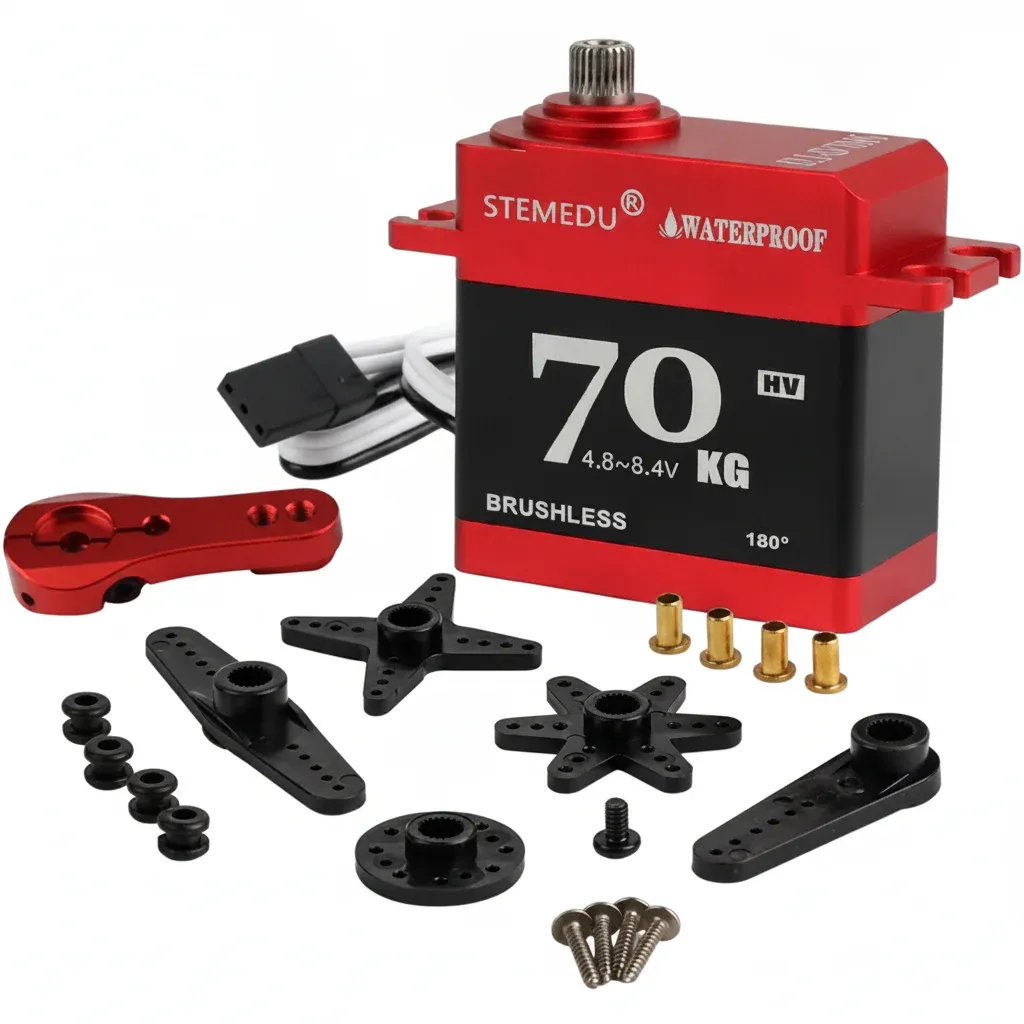
TL;DR: A digital servo motor is an advanced electronic steering and throttle actuator that uses an internal microprocessor to process receiver signals. It sends high-frequency power pulses (up to 300Hz) to the motor, resulting in significantly faster response times, unmatched holding power, and precise centring compared to standard analogue servos.
A digital servo motor is a highly precise actuator that replaces outdated analogue circuitry with a smart microprocessor, allowing it to instantly analyse receiver signals and deliver rapid torque to the gears. Based on our rigorous track testing here at BrushServo, upgrading to a digital servo motor is undoubtedly the most effective way to transform how your RC car responds to transmitter inputs.
Navigating a 1/8 scale buggy around a damp, rutted track on a Sunday morning requires absolute precision. If your vehicle feels sluggish when entering corners or struggles to hold a straight line through thick mud, your steering setup is likely holding you back. Furthermore, older steering systems often lack the holding power required for modern, heavy-duty RC platforms. This guide breaks down exactly how this technology works and why it is an essential upgrade for British RC enthusiasts facing demanding, wet conditions.
Key Takeaways
- A digital servo motor uses a microprocessor to send high-frequency pulses to the motor, drastically reducing response time.
- They offer superior holding power and dependable centring compared to traditional analogue units.
- Upgrading requires checking your Electronic Speed Controller (ESC) or Battery Eliminator Circuit (BEC) to handle the increased power draw.
- Choosing a waterproof digital servo motor is critical for surviving wet UK runs and muddy bash sessions.
How Does a Digital Servo Motor Work?
At first glance, a digital servo motor looks identical to an analogue one. They share the same external casing, mounting tabs, three-wire lead, and internal gear train. However, the crucial difference lies entirely within the internal control board.
While an analogue servo uses a standard custom integrated circuit to process the signal from your receiver, a digital servo motor incorporates a microprocessor. This small but powerful component analyses the incoming receiver signal and processes it before sending power to the internal motor. Consequently, this advanced processing power allows the servo to react to changes in stick movement with incredible speed.
If you are entirely new to building and upgrading RC vehicles, you might want to read our comprehensive ultimate guide to RC servo motors in the UK to understand the basic terminology before diving into the specific electronics of digital units.
What is the Difference Between Analogue and Digital Servo Motors?
To truly appreciate the performance leap, we must look at how power is delivered to the internal motor. Standard analogue servos send voltage pulses to the motor at a rate of 50 frames per second (50Hz). Therefore, when you turn the steering wheel on your transmitter, the servo waits for the next pulse before the motor applies torque to move the gears.
In contrast, a digital servo motor operates on a completely different scale. According to standard electronic control specifications published by leading RC manufacturers, the microprocessor in a digital servo motor increases this pulse frequency to 300Hz or even higher. As a result, the motor receives power pulses 300 times a second.
This massive increase in frequency means the deadband—the tiny amount of stick movement required before the servo reacts—is virtually eliminated. Consequently, the motor receives power faster, gets up to speed quicker, and reaches the desired position in a fraction of the time. Additionally, this rapid pulsing is exactly why a digital servo motor often emits a faint, high-pitched buzzing sound when powered on.
Are Digital Servos Better for RC Cars?
The short answer is yes, especially when facing the unique challenges of the UK RC scene. According to British Radio Car Association (BRCA) guidelines, reliable steering control is paramount for safety and performance. Whether you are competing on an astroturf track or bashing a 1/10 scale monster truck in the Peak District, the environment is undeniably harsh. Thick mud, tall wet grass, and heavy rain put immense strain on steering components.
When an RC vehicle hits a rut or a puddle, the front wheels experience massive resistance. An analogue servo will typically struggle against this physical force, causing the wheels to deflect and the vehicle to veer off course. Conversely, a digital servo motor detects this resistance instantly. It then sends rapid power pulses to the motor to fight back, holding the wheels perfectly straight.
Because the British weather is notoriously unpredictable, protecting these sensitive electronics is vital. Based on our extensive testing at BrushServo, combining digital precision with proper sealing ensures your rig survives the grueling winter months. You can learn more about protecting your electronics in our detailed breakdown: Waterproof RC Servo Explained: A UK Buyer's Guide.
What are the Advantages of a Digital Servo Motor?
Upgrading your steering system requires a clear understanding of the tangible benefits you will experience on the track. Ultimately, the microprocessor technology delivers three distinct advantages for 1/8 and 1/10 scale drivers.
Faster Response Times
Because the internal motor receives commands at 300Hz, a digital servo motor reacts to your transmitter inputs almost instantaneously. When you are navigating a tight chicane or making mid-air corrections off a jump, this speed allows for surgical precision. As a result, you feel completely connected to the vehicle, with no noticeable lag between turning the wheel and the tyres changing direction.
Superior Holding Power
Holding power refers to the servo's ability to maintain its position when external forces try to push it off-centre. For instance, if you are driving a heavy 1/8 scale truggy through thick British mud, the terrain constantly fights your steering. A digital servo motor excels here. The high-frequency pulses ensure the motor delivers maximum torque constantly, refusing to yield to the terrain.
Dependable Centring
One of the most frustrating issues with older steering setups is poor centring. Often, you complete a turn, let go of the wheel, and the RC car continues to drift slightly because the servo failed to return perfectly to absolute zero. Fortunately, a digital servo motor uses its microprocessor to track its exact position, snapping back to a flawless dead-centre every single time. This dependable centring is crucial for hitting high speeds on long straights without constantly micro-correcting your steering.
How Do I Choose the Right Digital Servo Motor?
Not all digital servos are built the same. While the microprocessor provides the brains, the physical motor and gear train provide the brawn. Therefore, for heavy 1/8 scale buggies and demanding 1/10 scale crawlers, torque is just as important as speed.
When selecting a unit for wet UK runs, you need a servo that can physically push large, heavy tyres through saturated ground. According to our BrushServo technical team, a 70KG brushless high torque servo offers the perfect pairing with a digital control board. Specifically, the digital board provides the rapid response, while the brushless motor delivers the raw 70KG pulling power without overheating.
Ultimately, matching the torque rating to your vehicle weight prevents the servo from stalling out under heavy load.
Ready to try BrushServo?
Shop Now — £74.26