Waterproof Rc Servo Explained: A UK Buyer's Guide
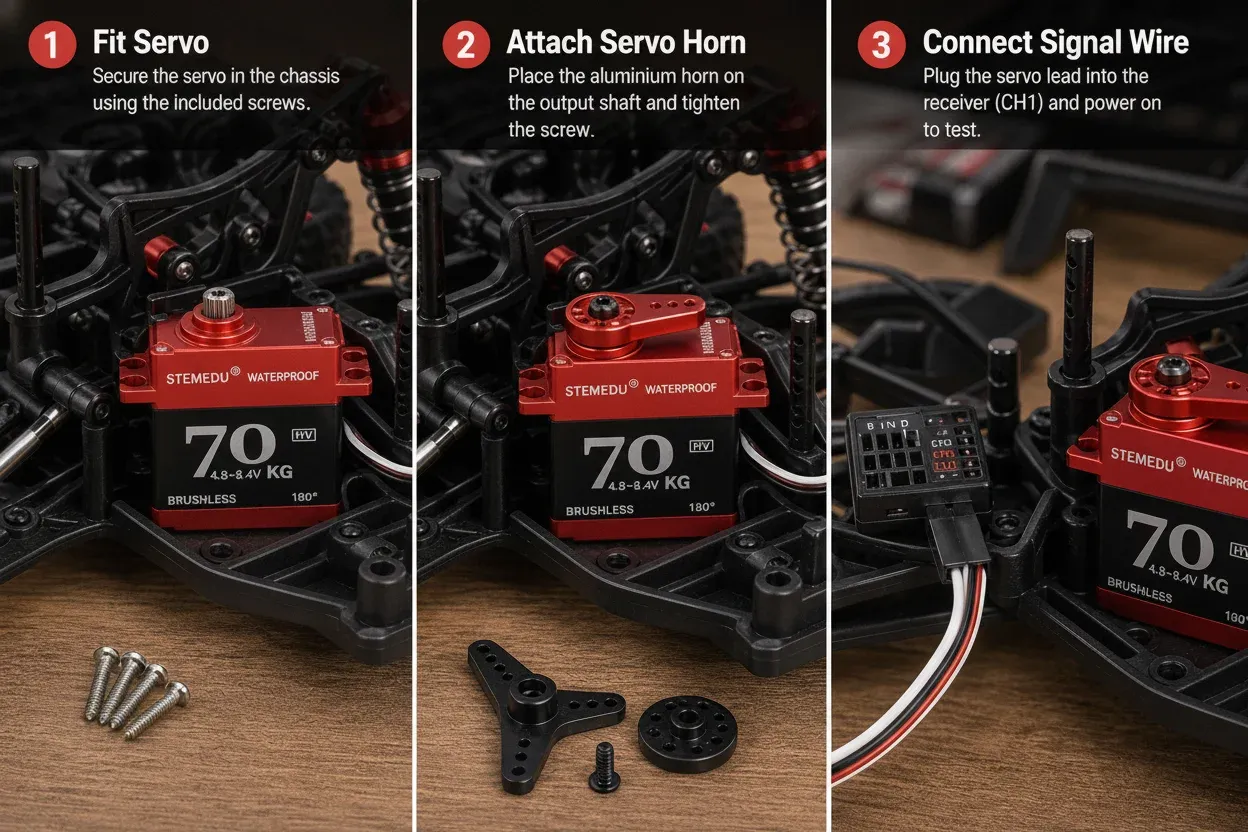
TL;DR: A waterproof rc servo is a sealed steering servo designed to keep working in wet grass, mud, puddles and rain. For UK drivers, the best choice is usually a digital, brushless, metal-geared servo with strong torque, reliable centring and proper sealing around the case, output shaft and cable exit.
A waterproof rc servo helps protect your RC car’s steering from water ingress, damp and debris, while also maintaining control in muddy, slippery British conditions. In practice, that means choosing a servo that is not only sealed, but also strong enough to steer accurately through wet grass, ruts and heavy terrain.
British RC driving rarely happens in perfect conditions. Wet grass, muddy tracks, puddled car parks and winter bashing sessions all put steering gear under pressure. That is why a waterproof rc servo is not a nice extra for many UK drivers; it is often the difference between a dependable run and a stripped, glitchy or seized steering setup.
At BrushServo, the focus is practical performance for real UK use: strong torque, fast response, reliable centring and durability in damp conditions. The brand’s 70KG brushless high torque servo is built around exactly that need, especially for 1/8 and 1/10 models where steering loads can rise quickly on rough ground.
This guide explains what a waterproof rc servo actually is, what “waterproof” usually means in practice, how to choose one for British conditions, and where buyers often get caught out.
Key Takeaways
- A waterproof rc servo is designed to resist water ingress, but resistance levels vary widely between products.
- For UK driving, sealing, torque, centring accuracy and gear durability matter more than headline speed alone.
- 1/8 buggies, truggies and monster trucks often benefit from high-torque brushless servos, especially in mud and grass.
- “Waterproof” does not mean invincible; correct installation and after-run care still matter.
- Brushless, digital waterproof servos are typically the strongest option for wet steering loads and repeatable response.
What is a waterproof RC servo?
A waterproof rc servo is a steering or control servo built with sealing measures that help stop water, damp and debris from reaching the motor, electronics and gear train. In an RC car, the servo converts electrical commands from the receiver into movement. For steering, that movement has to remain strong and precise while the model is bouncing, landing, cornering and ploughing through wet surfaces.
Most waterproof designs use gaskets around the case joints, seals around the output shaft, and improved protection where the servo lead exits the housing. Better models combine that sealing with metal gears, robust bearings and a case that resists flex under load.
If you want a broader foundation before comparing specifications, see The Ultimate Guide to Rc Servo Motor in the UK. It covers the basics of servo function, sizing and compatibility in more depth.
Why does waterproofing matter in the UK?
UK RC use is shaped by weather. Even when it is not raining, tracks and fields often stay damp for days. Grass holds moisture, clay tracks turn slick, and roadside spray can reach electronics during on-road running.
According to the Met Office, the UK average annual rainfall is around 1,159.9mm based on the latest climate averages for 1991–2020, with strong regional variation across the country. Therefore, RC electronics in Britain routinely face moisture exposure that fair-weather setups elsewhere may avoid.
For that reason, buyers in Britain tend to benefit from choosing a servo that is designed for wet runs from the outset rather than trying to patch-protect a standard unit after problems appear.
What does “waterproof” really mean on an RC servo?
One of the biggest buying mistakes is assuming every waterproof rc servo offers the same level of protection. However, that is not the case. Some are built to handle splashes, puddles and wet grass. Others are sealed well enough for repeated muddy sessions and wash-down exposure. Product listings do not always make this distinction clearly.
What is the difference between water-resistant and waterproof?
In practical RC terms, many products marketed as waterproof are better described as water-resistant. They may survive rain and splashes but still struggle if submerged, pressure-washed, or left wet inside the chassis for long periods.
So, serious buyers should look beyond the headline label and check the case design, output shaft sealing, quality of the lead exit point and the reputation of the manufacturer. If those details are vague, the waterproof claim may be too.
Do waterproof RC servos have IP ratings?
Some electronics categories use IP ratings to define ingress protection against solids and liquids. In RC, not every servo is tested or advertised that way. If an IP rating is provided, it can help compare products. If not, real-world design details and user experience become more important.
That is one reason many experienced RC owners prefer specialist, heavy-duty servos rather than generic low-cost listings with broad claims and very little technical depth.
How does a waterproof RC servo improve steering performance?
Waterproofing is only part of the story. A good waterproof rc servo should not just survive wet running; it should also steer properly under the extra resistance created by mud, thick grass, ruts and heavier tyres.
Why is stronger steering important in wet conditions?
Wet surfaces increase drag. Tyres sink into grass, front ends push through mud, and steering linkages face more resistance than they would on dry tarmac. As a result, a weak servo can stall, hesitate or fail to return to centre cleanly.
That is where a high torque model makes sense. BrushServo’s core site message centres on a 70KG brushless high torque servo for wet UK runs, and that positioning fits how many 1/8 and heavier 1/10 vehicles are actually used here. Torque gives the servo leverage to keep steering authority when conditions worsen.
Does a waterproof servo help with centring and response?
Response speed affects how quickly the wheels react to input, while centring determines whether they return accurately after each turn. In slippery conditions, dependable centring can be the difference between a composed line and a wandering front end.
A digital brushless waterproof servo usually holds position better than a basic analogue unit. It also tends to deliver more consistent control through repeated corrections, which matters during racing and technical bashing.
Can a waterproof RC servo reduce failure in mud and rain?
Moisture can cause corrosion, electrical instability and bearing wear. Once water gets inside, the servo may not fail immediately. Instead, it might become noisy, inconsistent or weak over time. A properly sealed waterproof rc servo lowers that risk and gives the buyer a better chance of long-term reliability.
Based on our testing focus and customer use cases in typical British conditions, the servos that last best are usually those combining proper sealing with metal gears, high torque and a rigid case rather than relying on a waterproof label alone.
Which features matter most when buying a waterproof RC servo?
Buyers often compare one figure only, usually speed or torque. However, that is not enough. For a useful buying decision, look at the complete picture.
How much torque do you need in a waterproof RC servo?
Torque is the turning force a servo can generate. If you run a 1/8 buggy, truggy, monster truck or a heavy 1/10 basher, torque is usually one of the first priorities. Larger tyres, aggressive steering geometry and rough surfaces all demand more force.
If you are weighing up whether a very high torque servo is suitable for your model, 70Kg Servo Explained: A UK Buyer's Guide is worth reading alongside this article.
How important is servo speed?
Servo speed tells you how quickly the output shaft moves in response to steering input. Faster is not always better on its own, but a responsive servo can make the car feel more accurate and easier to place, especially on technical sections.
Even so, for many UK bashers and heavier off-road models, balanced speed with strong torque is often more useful than chasing the fastest number on the product page.
Are metal gears better for wet UK running?
In many cases, yes. Metal gears generally cope better with repeated shocks, heavier tyres and muddy steering loads than plastic gears. That makes them a common choice for off-road and all-weather use.
They are not a guarantee of indestructibility, but they do tend to offer better durability where steering takes regular punishment.
Why does centring accuracy matter?
Centring is the servo’s ability to return to the same neutral point repeatedly. On a dry indoor surface, poor centring is annoying. On a wet outdoor track, it can make the car feel vague, unstable and tiring to drive.
Therefore, if you drive in mixed British conditions, centring accuracy should sit near the top of your checklist.
Should you choose digital and brushless?
For demanding use, a digital brushless waterproof servo is often the strongest option. Digital control can improve holding power and precision, while brushless motor design is generally associated with better efficiency, response and durability.
As a result, many serious drivers see digital brushless construction as the sensible long-term upgrade for wet, high-load steering setups.
How important is case sealing and build quality?
Case sealing is easy to overlook, yet it is central to whether a waterproof rc servo actually lives up to the claim. Look for a well-machined case, proper gaskets, a sealed output spline area and a well-protected cable exit.
In addition, a rigid case helps maintain gear mesh and internal alignment under load, which supports both durability and steering consistency.
What size RC car needs a waterproof high-torque servo?
Not every model needs extreme torque, but larger and heavier vehicles usually benefit most from a stronger waterproof servo. That is especially true when they are driven on grass, mud, loose dirt or rough mixed surfaces.
Do 1/10 RC cars need a waterproof servo?
Many 1/10 models do, particularly bashers, short course trucks, crawlers and heavier 4WD platforms used outdoors in Britain. A basic waterproof servo may be enough for light-duty running, but steering loads can rise quickly with larger tyres or sticky terrain.
Do 1/8 buggies and truggies need more torque?
Usually, yes. 1/8 buggies, truggies and monster trucks place much greater demand on the steering system. Therefore, a high-torque waterproof servo is often the safer and more dependable choice, particularly for wet racing or winter bashing.
Can you fully submerge a waterproof RC servo?
In most cases, no. Even if a waterproof rc servo is well sealed, that does not automatically mean it is intended for full submersion. Splashing through puddles, wet grass and mud is one thing; sitting underwater for prolonged periods is another.
Unless the manufacturer clearly states an appropriate ingress rating or submersion capability, it is better to treat waterproof as protection against normal wet running rather than unlimited underwater use.
So, if your driving regularly involves deep water crossings, you should check the exact specification rather than relying on marketing shorthand.
How do you make a waterproof RC servo last longer?
Even the best sealed servo benefits from sensible maintenance. Waterproof does not mean maintenance-free. Instead, it means the servo starts with better protection against the kind of conditions UK drivers regularly face.
Dry the car after wet runs
After running in rain or mud, wipe down the chassis and remove standing moisture around the servo area. This helps reduce long-term corrosion risk and stops water lingering around seals and connectors.
Avoid pressure washing
High-pressure water can force its way past seals that would normally cope with splashes and spray. Therefore, a gentle clean is usually the safer option.
Check linkages and servo saver setup
A servo that is constantly fighting binding linkages or a badly adjusted servo saver will wear faster, especially in heavy mud. So, make sure the steering system moves freely and is correctly set up.
Inspect for damage after impacts
A hard crash can compromise the case, seals or output shaft area. If the servo starts sounding rough or behaving inconsistently after an impact, inspect it before the next run.
Is a waterproof brushless servo worth it for UK drivers?
For many British RC owners, yes. If you mainly drive in dry indoor conditions, a standard servo may be enough. However, if you run outdoors through the typical mix of damp grass, muddy corners, puddles and winter grime, a waterproof brushless servo is often worth the investment.
Based on our testing priorities and the demands of real UK off-road driving, the biggest gains usually come from choosing a servo that combines sealing with genuine steering strength. In other words, waterproofing matters most when it is paired with enough torque, stable centring and durable internal parts.
That is why BrushServo’s emphasis on high-torque brushless performance fits the needs of many UK bashers and racers, particularly in 1/8 and heavy 1/10 applications.
Frequently asked questions about waterproof RC servos
What is the best waterproof RC servo for muddy UK conditions?
The best option is usually a digital, brushless, metal-geared servo with high torque, strong centring and credible sealing. For heavier 1/8 and 1/10 vehicles, steering strength matters just as much as water resistance.
Are all waterproof RC servos the same?
No. Protection levels, build quality and internal strength vary significantly. Some cope with splashes only, while others are built for repeated wet and muddy use.
Do I need a waterproof servo for grass running?
In the UK, it is often a wise choice. Grass usually holds moisture, and steering drag can be much higher than on dry tarmac. Therefore, a sealed and torquey servo can improve both durability and control.
Is a waterproof servo enough on its own?
Not always. You still need proper installation, suitable voltage, free-moving steering linkages and sensible after-run care if you want the best reliability.
Why do cheap waterproof servos sometimes fail quickly?
Some low-cost models use vague waterproof claims without strong sealing, good bearings or durable gears. As a result, they may survive brief wet use but struggle over time in demanding British conditions.
Ready to try BrushServo?
Shop Now — £74.26